Mental Health Retro Svg Bundle: A Designer's Honest Review
As someone who spends most of my days digitizing files and testing machine embroidery design concepts for clients, I approach new assets with a critical eye. It is not enough for a file to look cute on a screen; it must translate beautifully into thread, withstand the tension of the hoop, and resonate with the end user. Recently, I had the chance to evaluate the Mental Health Retro Svg Bundle specifically for its potential in real-world production. This collection sits firmly in the Crafts and Graphics categories, but my focus was entirely on how these vector assets perform when converted into tangible, stitched items.
First Impressions: Mood and Visual Personality
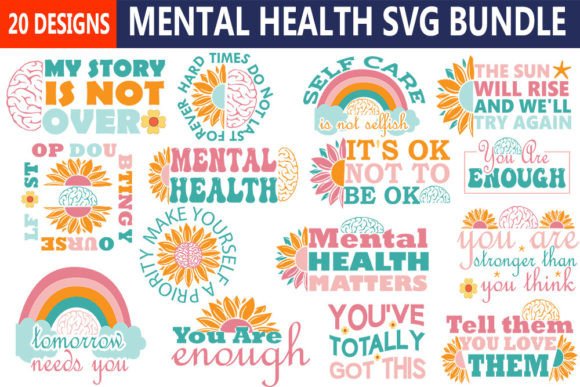
Opening the zip file, the first thing that strikes me about the Mental Health Retro Svg Bundle is its cohesive aesthetic. The "retro" label is often overused, but here it feels authentic. The shapes are clean, relying on bold lines and simplified forms that hint at 70s typography and groovy iconography without becoming cluttered. For an embroiderer, this is excellent news. Complex gradients and tiny details often get lost in stitching, but these designs possess a visual personality that suggests they will hold up well under the needle.
The mood is uplifting yet grounded. In a market saturated with generic positivity, these graphics feel like they belong on a vintage concert tee or a well-worn denim jacket. They evoke a sense of community and self-care, which is exactly what customers are looking for right now. The layout of the individual files suggests they were created with versatility in mind, offering a mix of standalone icons and text-based motifs that can work as a central chest piece or a subtle sleeve detail.
Real-World Application: The Tote Bag Test
To truly understand the value of this bundle, I envisioned a specific project: a custom embroidered tote bag for a local mental health awareness walk. This is a common request for small shop owners and Etsy sellers. The goal was to create a handmade product that feels professional yet accessible. I selected a few of the stronger motifs from the Mental Health Retro Svg Bundle to simulate how they would look as an embroidered patch or directly stitched onto canvas.
Because the designs rely on strong outlines, they are ideal for satin stitch borders combined with fill stitch interiors. When you import these SVGs into your embroidery software, the clear paths make digitizing significantly easier. There is less guesswork involved in defining edges, which reduces the risk of jagged stitches. For a tote bag design, where durability is key, these robust shapes ensure the artwork won't fray or lose definition after multiple washes. The retro style also pairs exceptionally well with textured fabrics like canvas or heavy cotton twill, adding a layer of depth that flat printing cannot achieve.
Versatility Across Product Lines
Beyond tote bags, the potential applications for this digital embroidery file set are vast. I can easily see these working as sweatshirt embroidery for boutique streetwear brands. The slightly distressed or worn-in look of retro graphics complements the cozy texture of fleece perfectly. For those running a craft business focused on nursery decor, select softer motifs could be adapted for baby embroidery on onesies or blankets, provided the stitch density is adjusted for delicate skin.
For commercial embroidery projects, consistency is everything. Since the bundle includes 20 files in SVG, PNG, EPS, and DXF formats, you have the flexibility to use them across different platforms. You might use the PNGs for printable mockup creation to test sales before stitching a single thread, while the DXF files serve as the foundation for your cutting machines or embroidery software. This multi-format approach saves time for creative entrepreneurs who need to pivot quickly between digital listings and physical finished product fulfillment.
Technical Considerations and Fabric Challenges
While the designs are promising, a responsible reviewer must address where caution is needed. Not every graphic in the Mental Health Retro Svg Bundle will work on every surface. If you are planning to stitch these onto stretchy fabrics like jersey knits or thin performance wear, you must pay close attention to your stabilizer choice. Retro designs often feature curved lines and circular elements that can pucker if the fabric shifts during stitching.
Additionally, consider the hoop size limitations of your machine. Some of the more intricate layouts might require a larger hoop to maintain proper spacing between elements. If you are working on curved surfaces like caps, ensure the design does not have details that extend too close to the edge, as the frame curvature can distort the final look. Dark fabrics present another challenge; while the bold shapes are generally forgiving, you may need to adjust your thread colors to ensure sufficient contrast. A dark navy thread on a black sweatshirt might look sophisticated in a vector preview but disappear entirely once stitched.
Enhancing Brand Value and Customer Trust
Using high-quality assets like the Mental Health Retro Svg Bundle directly impacts your brand perception. When a customer receives a personalized gift or a piece of custom apparel with crisp, well-executed embroidery, it builds trust. Sloppy stitching or poorly adapted designs can undermine the perceived value of your small shop product. These graphics, with their intentional styling, help elevate the presentation of your work. They signal that you care about the aesthetic details, which encourages buyer engagement and repeat business.
For holiday embroidery or special occasion gifts, the emotional resonance of mental health themes adds a layer of thoughtfulness. It transforms a simple item into a meaningful statement. Whether it is a pillow cover for a friend going through a tough time or an apron for a therapist's office, the right design fosters connection.
Practical Notes for the Embroidery Designer
Before committing to a full production run, I always recommend a few practical steps. First, test the design on scrap fabric that matches your final material. This allows you to check the stitch density and ensure there are no gaps in the fill areas. Second, review the design in black and white. Sometimes, color distracts us from structural issues in the layout. Third, confirm the licensing terms. While the file formats suggest readiness for various uses, always verify if the license permits resale as a design asset or only as a finished product.
Finally, inspect small details. If a design includes tiny lettering or fine running stitch elements, ensure your machine can handle that resolution. It is better to simplify a element than to risk a bird's nest of thread on the back of a client's garment. By treating the Mental Health Retro Svg Bundle as a starting point for your creativity rather than a finished solution, you can maximize its potential. With the right preparation, these graphics can become the cornerstone of a successful, heartfelt product line.